Gi vs No-Gi Jiu-Jitsu in Fort Myers: Which Should You Start With?
· By Master Willy (Guillermo) Hardoy
Search for Brazilian Jiu-Jitsu for more than a few minutes and you will run into two words that confuse almost every beginner: gi and no-gi. Some videos show people in thick cotton uniforms pulling on collars and sleeves. Others show athletes in shorts and tight shirts moving fast, with nothing to grab but arms, legs and necks.
Both are Brazilian Jiu-Jitsu. They share the same positions, the same core principles and the same goal of controlling a partner with leverage instead of strength. But they feel different on the mat, they reward slightly different habits, and they lead to different first months of training.
This guide breaks down what actually changes between gi and no-gi jiu jitsu, the honest pros and cons of each, and how to decide where to begin if you are thinking about training in Fort Myers or Cape Coral.
What the Gi Actually Is
The gi (sometimes called a kimono) is the traditional Brazilian Jiu-Jitsu uniform: a heavy woven jacket, reinforced pants and a belt that shows your rank. It looks a lot like a judo uniform, which makes sense, because BJJ grew out of judo and Japanese jiu-jitsu in the early 1900s.
The jacket is built to be grabbed. Lapels, collars, sleeves and pant legs all become handles, and a big part of gi training is learning how to use those handles to control a partner, and how to break them when your partner grabs you.
The belt matters too. In gi Brazilian Jiu-Jitsu the belt color (white, blue, purple, brown, black) is part of the uniform, so your rank is visible every time you step on the mat. For many students that belt path is a big part of the motivation to keep showing up.
What No-Gi Jiu-Jitsu Looks Like
No-gi jiu jitsu drops the uniform. Students usually wear grappling shorts or spats and a rash guard, a fitted athletic shirt that does not give the other person anything to hold. Without fabric grips, control comes from the body itself: underhooks, overhooks, wrist control, head position and tight body-to-body pressure.
Because there are fewer handles, no-gi tends to move faster. Positions are harder to hold, sweat makes everything slippery, and scrambles happen more often. Many people describe no-gi as feeling closer to wrestling, and it is the format most often seen in submission grappling events and in the grappling portion of mixed martial arts.
The positions do not change. Mount, side control, guard and back control all exist in both formats. What changes is how you hold those positions and which attacks become more or less effective.
The Key Differences on the Mat
Grips are the biggest difference. In the gi, a strong collar grip or sleeve grip can slow a partner down almost completely. In no-gi, grips are shorter lived, so you rely more on positioning and timing to stay in control.
Pace follows from grips. Gi rounds are often slower and more methodical, with long exchanges where both people fight for control of the fabric. No-gi rounds usually include more explosive movement and more transitions in a short period of time.
The technique menu shifts. The gi opens up a whole family of chokes that use the collar and lapel, plus guards built around sleeve and pant grips. No-gi places more emphasis on certain leg attacks, front headlock positions and wrestling style takedowns. Rule sets vary by school and competition, so the exact list of allowed techniques can differ.
Escapes feel different too. In the gi, friction from the fabric makes it harder to slide out of a bad spot, so you learn to escape with precise framing and patience. In no-gi, a sweaty partner is easier to slip away from, which can make escapes feel easier but can also let bad habits slide.
Pros and Cons of Training in the Gi
The biggest advantage of the gi is that it slows everything down. For a beginner, that extra time is valuable: you can feel what is happening, recognize positions and understand why a technique works instead of just reacting.
The gi also punishes sloppy movement. Because your partner can grab your sleeve or collar at almost any moment, you learn early to keep your elbows tight, protect your neck and move with intention. Many coaches believe those defensive habits carry over well to no-gi later.
On the downside, the gi is hot and heavy, which is worth mentioning in Southwest Florida. Grip fighting can be hard on the fingers at first, and gis need regular washing after every class. A quality gi is also an added purchase once you decide to keep training.
Finally, some gi techniques depend on the uniform, so they do not translate directly to situations where nobody is wearing a jacket. That does not make them useless, since the underlying positions and leverage still apply, but it is a fair point to understand.
Pros and Cons of No-Gi
No-gi has real strengths. Gear is simple and lighter, the pace is great conditioning, and the grips and positions are close to what you would see in wrestling or MMA. For people who already have a wrestling background, no-gi can feel familiar right away.
The tradeoff is that no-gi can be harder to learn from zero. With fewer handles, beginners often end up relying on speed and athleticism instead of technique, which is exactly what Brazilian Jiu-Jitsu is supposed to teach you not to depend on. Some newer students also find the faster pace overwhelming before they understand basic positions.
Neither format is better in every way. Many experienced practitioners train both, and the general consensus in the BJJ community is that each one fills gaps the other leaves.
Which Should You Start With?
For most beginners, starting in the gi is the safer and more complete path. The slower pace makes it easier to learn positions step by step, the grips give you a clear way to control and be controlled, and the belt system gives you visible progress along the way. Plenty of schools follow this approach for exactly those reasons.
If your main goal is MMA or submission grappling events, no-gi will eventually be a big part of your training. Even then, many coaches suggest building a foundation in the gi first, because the technical habits it builds tend to make your no-gi game more precise.
Your body and schedule matter too. If you are coming back to training after a long break, or you are starting later in life, the gi often feels more controlled and less frantic. If you have an injury or limitation, let the instructor know before class so drills can be adjusted.
The honest answer: the format matters less than consistency. Two or three classes a week in either format, with a good instructor and good training partners, will teach you far more than switching back and forth every few weeks.
Gi Training at ATT Fort Myers Team Hardoy
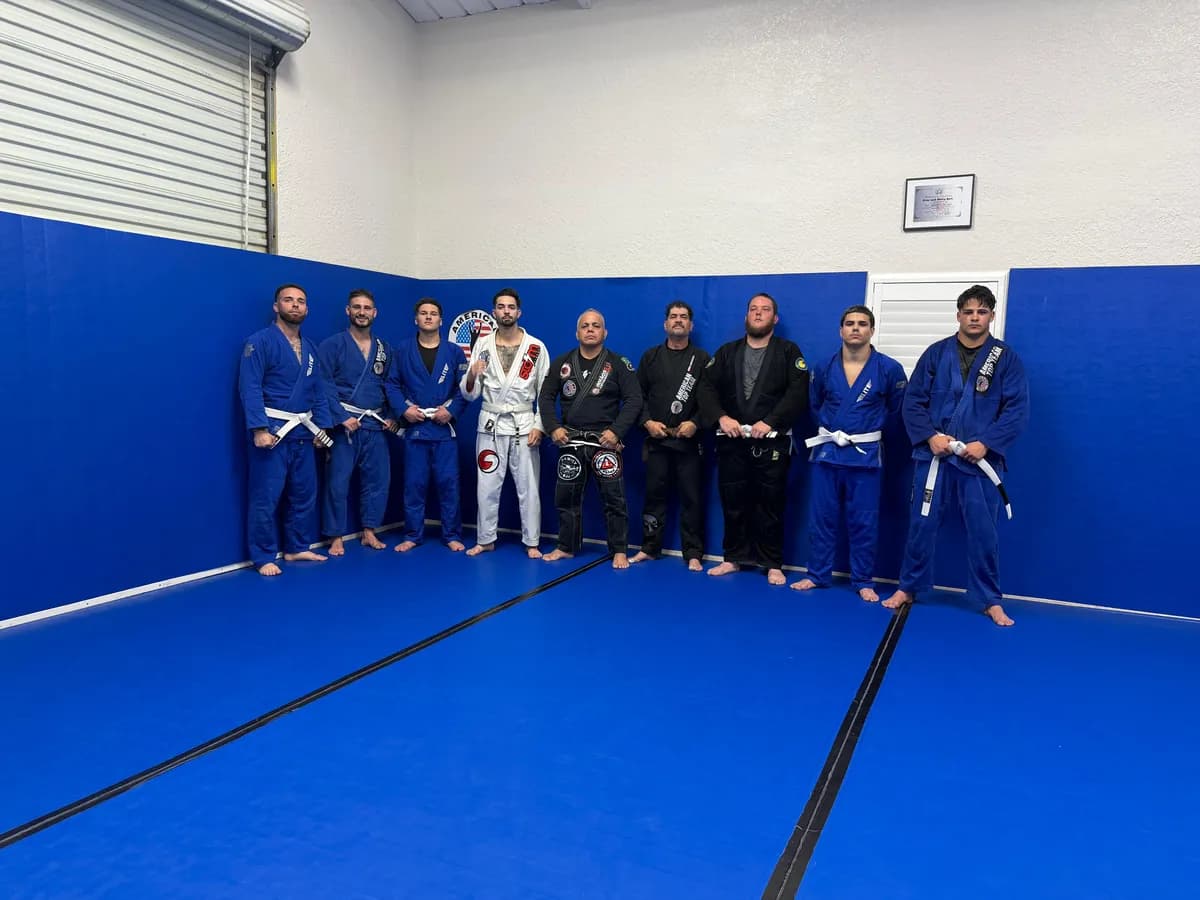
ATT Fort Myers Team Hardoy trains in the gi, and the kimono is part of the identity of the academy. Classes are led by Master Willy (Guillermo) Hardoy, a 4th degree Brazilian Jiu-Jitsu black belt from American Top Team Florida, with programs for adults, women and kids.
Grand opening is expected in approximately 30 days. Until then, training is exclusively for returning students and invited guests, and adult, women-only and children's class schedules will be announced soon. If you live in Fort Myers or nearby Cape Coral and want to be among the first on the mat, the simplest step is to join the Grand Opening List on WhatsApp at (239) 475-7105.
You do not need to own a gi to get on the list or to plan your first visit. Comfortable athletic clothes without zippers or buttons are fine for a first class, and we can tell you what to get when you decide to keep training.
Frequently asked questions
- Is gi or no-gi better for beginners?
- Most coaches recommend starting in the gi. The slower pace and fabric grips make it easier to learn positions, control and escapes step by step before adding the faster pace of no-gi.
- Do I need to buy a gi before my first class?
- No. Comfortable athletic clothing without zippers or buttons is fine for a first class at ATT Fort Myers Team Hardoy. We can tell you what to get once you decide to keep training.
- Does gi Brazilian Jiu-Jitsu work for self-defense?
- The positions, escapes and leverage you learn in the gi apply in any situation. Some gi chokes depend on a jacket, but the body mechanics and composure carry over. No training replaces caution in real situations.
- Is no-gi jiu jitsu the same as wrestling?
- No. No-gi shares some takedowns and control positions with wrestling, but it adds the guard, sweeps and submissions of Brazilian Jiu-Jitsu, and you can win from your back, which is not true in wrestling.
- Does ATT Fort Myers Team Hardoy offer no-gi classes?
- The academy trains in the gi. Adult, women-only and children's class schedules will be announced soon. For the latest details, message us on WhatsApp at (239) 475-7105.
- When can I start training in Fort Myers?
- Grand opening is expected in approximately 30 days. Until then, training is for returning students and invited guests. Join the Grand Opening List on WhatsApp at (239) 475-7105 and we will let you know when classes open.
Keep going
Related services
Serving
Found this helpful? Make us a preferred source on Google.
Ready to step on the mat?
ATT Fort Myers Team Hardoy opens in Fort Myers soon. Join the grand opening list on WhatsApp and we will let you know as soon as classes open.