
How Often Should You Train Jiu-Jitsu? A Fort Myers Plan by Goal
· By Master Willy (Guillermo) Hardoy
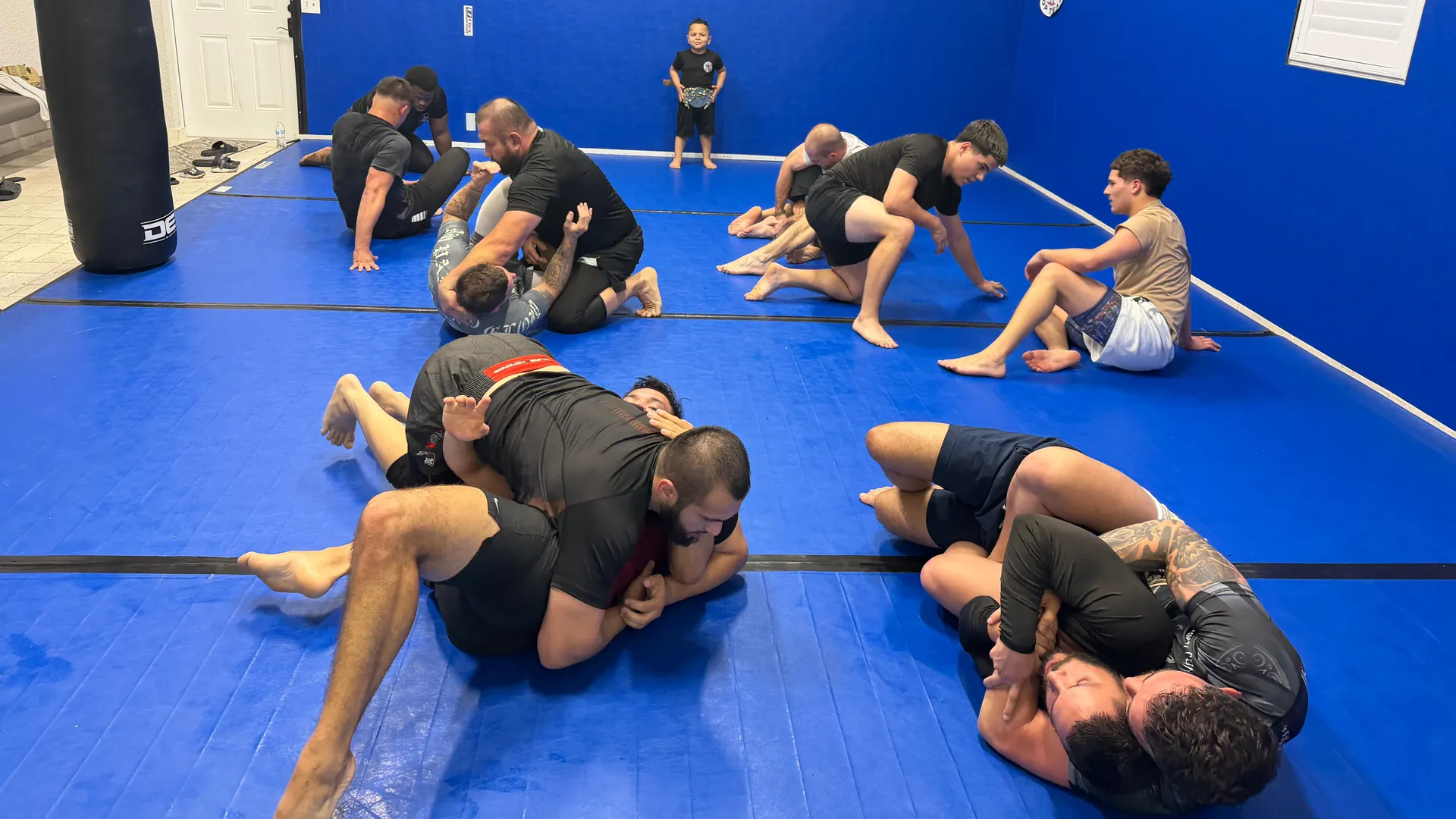
"How often should I train jiu jitsu?" is one of the first questions almost every new student asks, usually right after their first class leaves them sore in muscles they did not know they had. The honest answer is that there is no single magic number. The right frequency depends on what you want out of Brazilian Jiu-Jitsu, how your body recovers, and how much time your real life actually leaves you.
What most coaches agree on is that consistency beats intensity. Two classes a week, every week, for a year will usually take you further than five classes a week for a month followed by burnout or an injury. BJJ is a long game, and the people who improve the most tend to be the ones who simply keep showing up.
This guide breaks down a sensible training frequency by goal, explains how recovery fits in, covers what the Southwest Florida climate means for hydration, and offers practical plans for working adults and for kids.
The Short Answer: Two to Three Classes a Week
For most beginners, two to three classes per week is a strong starting point. It is enough repetition for techniques to stick from one session to the next, but it leaves time between classes for your joints, hands, and neck to adapt to a type of movement they are not used to yet.
Training only once a week still has value, especially if your schedule is tight, but progress tends to be slower because a lot of each class is spent remembering what you learned seven days earlier. Many students find that the jump from one to two sessions a week is where things start to click.
On the other end, jumping straight into daily training as a brand-new student often backfires. Your cardio may feel fine, but connective tissue, fingers, and skin take longer to adapt than muscles do. Building up gradually over the first few months is the safer path.
Training Frequency by Goal
Fitness and stress relief: If your main goal is to get in shape, move better, and have something more engaging than a treadmill, two to three classes a week is usually plenty. Grappling is a full-body workout, and pairing it with a walk, a swim, or some light strength work on off days is a well-rounded routine.
Self-defense: If you want practical skills to stay calm and in control in a close-contact situation, aim for about three classes a week over a long period. Self-defense in BJJ comes from repetition under realistic pressure: escapes, keeping a safe position, and getting back to your feet. Those reactions become reliable only after many hours of consistent practice. No amount of training replaces awareness and caution, but regular mat time makes the fundamentals second nature.
Competing: Students who want to compete in tournaments often train four to six times a week, mixing technique classes, live rolling, and some strength and conditioning. That level of volume generally works best once you already have a solid base and a coach guiding your plan. If competition is a long-term goal, building a consistent base first is the smartest step.
Whatever your goal, it helps to tell your instructor. A good coach can suggest which classes to prioritize and when it makes sense to add more volume.
Recovery Is Part of Training
Improvement does not happen only on the mat. Your body adapts during the hours and days after training, which is why rest is not wasted time. Sleep, nutrition, and a little mobility work make a real difference in how you feel at your next class.
A few signs you may be training more than you can currently recover from: joints that stay achy for days, sleep that feels restless, motivation dropping, or getting tapped by the same things over and over because you feel flat. When those show up, an easy week or an extra rest day is usually the right call.
Minor soreness is normal, especially in the first few months. Sharp or lingering pain is different, and it is worth getting checked by a medical professional before you push through it. Training smart, tapping early, and choosing your rolling intensity based on how you feel will keep you on the mat longer.
Many experienced students also vary intensity across the week. For example, one session might focus on drilling and technique, another on lighter flow rolling, and only one on harder rounds. That mix lets you train often without every class draining you completely.
Training in the Florida Heat: Hydration Matters
Southwest Florida brings heat and humidity for much of the year, and that affects how you recover between classes, even when you train indoors. Commuting in the heat, working outside, or doing other outdoor activities can leave you partially dehydrated before you ever step on the mat.
A simple habit helps: drink water steadily through the day instead of trying to catch up right before class. Bring a water bottle to every session, and consider replacing electrolytes after long or sweaty training, especially in the summer months. Signs like headaches, dizziness, or unusual fatigue are cues to slow down and rehydrate.
Heat and humidity also make gear and hygiene more important. Washing your gi or rash guard after every session and letting it dry fully keeps both you and your training partners healthier.
A Realistic Plan for Adults With Jobs and Families
Most adults who train BJJ are not professional athletes. They have jobs, kids, commutes, and long weeks. The good news is that steady progress does not require training every day. Two consistent sessions a week, ideally spaced out (for example, early in the week and later in the week), is a realistic plan for many people in Fort Myers and Cape Coral.
A few habits make it easier to stay consistent. Treat class times like appointments on your calendar. Keep a training bag packed and ready in the car. Pick the sessions that fit your energy best, whether that is before work or in the evening. And on busy weeks, one class is far better than zero.
It also helps to take a few notes after class: one technique you learned and one thing to work on next time. That small habit makes each session count more, which matters when your training time is limited.
How Often Should Kids Train Jiu-Jitsu?
For kids, the focus is different. The goal is building coordination, confidence, focus, and a love for the sport, not maximizing volume. One to three classes a week is common for children, depending on their age, energy, and other activities like school sports.
Kids generally recover quickly, but they can also lose interest if training starts to feel like a chore. Watching how your child responds is the best guide. If they come home excited and ask when the next class is, that is a good sign the frequency is right. If they seem tired or reluctant, it may be time to scale back for a while.
Consistency matters for kids too. Regular attendance helps them build friendships on the mat and see their own progress, which is a big part of what keeps them motivated over the long run.
Getting Started at ATT Fort Myers Team Hardoy
ATT Fort Myers Team Hardoy is a Brazilian Jiu-Jitsu school led by Master Willy (Guillermo) Hardoy, a BJJ black belt 4th degree from American Top Team Florida, with programs for adults, women, and kids. Our grand opening is expected in approximately 30 days, and until then, training is exclusively for returning students and invited guests.
Adult, women-only, and children's class schedules will be announced soon. Once they are posted, you will be able to plan your weekly training around the sessions that fit your goal and your life. To be among the first to know, join the Grand Opening List on WhatsApp at (239) 475-7105.
Frequently asked questions
- How often should a beginner train jiu-jitsu?
- Two to three classes a week is a strong starting point for most beginners. It gives enough repetition for techniques to stick while leaving time for your body to adapt to grappling.
- Is training jiu-jitsu once a week worth it?
- Yes. Once a week still builds skill and fitness, especially when life is busy. Progress is usually slower than with two or more sessions, but steady attendance over time adds up.
- Can I train jiu-jitsu every day?
- Some experienced students train daily, but it usually works best after building a base and when intensity varies across the week. Beginners are generally better off ramping up gradually to avoid overuse injuries.
- How many rest days do I need between BJJ classes?
- Many beginners do well with at least one rest day between sessions at first. Over time your body adapts, and you may be able to train on back-to-back days, especially if one of them is lighter drilling.
- How often should kids take jiu-jitsu classes?
- One to three classes a week is common for kids, depending on age, energy, and other activities. The best guide is your child's enthusiasm and how well they recover between classes.
- When will class schedules be available at ATT Fort Myers?
- Adult, women-only, and children's class schedules will be announced soon, ahead of the grand opening expected in approximately 30 days. Join the Grand Opening List on WhatsApp at (239) 475-7105 to hear first.
Keep going
Related services
Serving
Found this helpful? Make us a preferred source on Google.
Ready to step on the mat?
ATT Fort Myers Team Hardoy opens in Fort Myers soon. Join the grand opening list on WhatsApp and we will let you know as soon as classes open.