
Jiu-Jitsu for Cape Coral Families: A Practical Guide to Getting Started
· By Master Willy (Guillermo) Hardoy
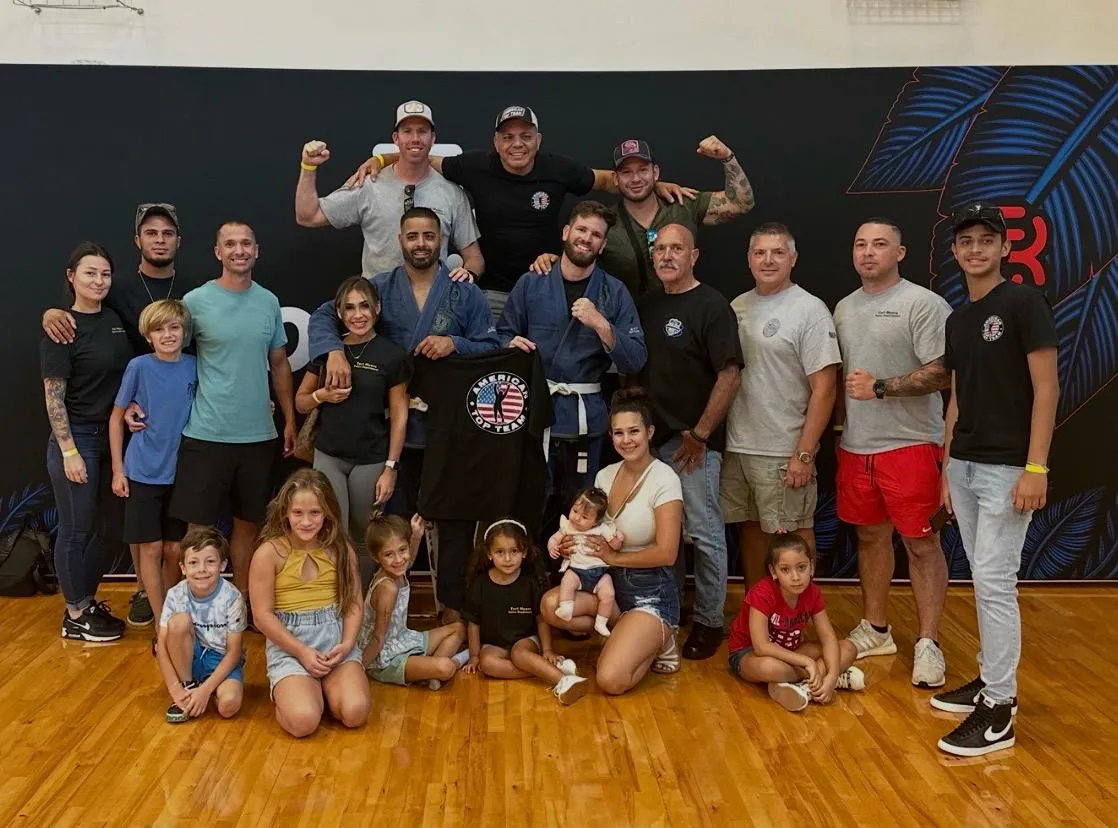
If you live in Cape Coral and you have been hearing about Brazilian Jiu-Jitsu from a neighbor, a coworker, or your kid's friend at school, you are probably asking the same questions most parents and adults ask before signing up for anything new: is this academy legit, will my kid actually stick with it, and is it worth the trip if the closest serious school happens to be across the river in Fort Myers.
This guide is not a sales pitch for one program. It is a practical walkthrough of what to actually evaluate before you commit, what a typical first few weeks look like for both kids and adults, and the questions that separate a well-run academy from one that just has mats on the floor. Cape Coral families train with schools on both sides of the Caloosahatchee, so the goal here is to help you make a decision you will not second-guess six months in.
Expect specifics on instructor credentials, how kids classes are structured differently from adult classes, what a women-only training environment should offer, and the small logistics (gi hygiene, heat, scheduling around one trip for the whole family) that make the difference between a habit that sticks and a membership that quietly lapses.
Start with the instructor, not the building
A nice mat space and a clean lobby are nice to have, but they tell you almost nothing about what your kid or you will actually learn. The single most important factor in choosing a Jiu-Jitsu academy is who is teaching the class, and specifically, what their belt rank and lineage actually mean.
Ask how long the head instructor has held a black belt and under which affiliation they trained. Brazilian Jiu-Jitsu belts take years to earn, and a black belt with multiple degrees has typically spent well over a decade building and refining technique under senior instructors of their own. That matters because fundamentals taught wrong in week one get harder to unlearn the longer you train.
It is also worth asking whether the head instructor actually teaches the beginner and kids classes themselves, or whether those are handed off entirely to newer assistant instructors. Both models can work, but you want to know which one you are signing up for before your first class, not after a month of confusion about who is actually coaching your child.
What a real kids BJJ class should look like
Kids Jiu-Jitsu is not a scaled-down adult class with smaller gis. A well-run kids program has its own curriculum built around attention span, physical development, and age-appropriate discipline, not just watered-down adult drills.
Look for structure: a warm-up that doubles as coordination and body-awareness training, short technique blocks broken into digestible pieces, and live practice that is closely supervised rather than a free-for-all. Good kids classes also spend real time on non-technique skills: listening when an instructor is talking, waiting your turn in line, shaking hands and bowing in and out of class, and handling losing a round without a meltdown.
Those soft skills are often the actual reason parents stick with the sport long after the first few classes. A child who learns to control frustration on the mat tends to carry that same composure into school and at home, and an instructor who prioritizes that alongside technique is worth more than one who only cares about producing competitors.
Training together as a Cape Coral family
One detail that matters more than most people expect going in: whether the schedule actually lets your family train in one visit. If you have a kid in the kids program and you also want to train as an adult, ask the academy directly which class times line up so you are not making two separate trips across town, or across the river, in the same week.
Families who train on the same day, even in separate classes back to back, tend to stay consistent longer than families juggling split schedules. It turns Jiu-Jitsu into a shared household routine instead of one more thing competing for calendar space.
If you are coming from Cape Coral and the academy you are considering sits in Fort Myers, this question matters even more. A single combined trip over the bridge is a very different commitment than two separate ones, so get the actual class times before you decide the commute is or is not worth it.
What a women-friendly training environment actually offers
Women considering BJJ for the first time often have a legitimate concern that has nothing to do with fitness: will I be the only woman on the mat, rolling exclusively with men twice my size, in an environment that was not built with me in mind.
A real women's program addresses that directly, usually with dedicated class times, instruction that leans into practical self-defense scenarios alongside sport technique, and a culture where new women students are paired thoughtfully rather than thrown into open mat with no guidance. Ask whether the academy runs women-specific classes or simply allows women to join the general program, because those are two different offers.
Confidence building is a real and often underrated benefit here. Learning to control a larger, stronger opponent through leverage and technique, rather than raw strength, tends to change how women carry themselves off the mat too. That is not a clinical promise, it is simply the most consistently reported reason women stay with the sport once they get past the first nervous weeks.
Training through a Southwest Florida summer
Cape Coral and Fort Myers summers are long, hot, and humid, which is exactly why an indoor mat sport fits the climate well. But heat and humidity still affect how you should approach training, especially if you or your kid are new to it.
Hydrate well before class, not just during it. Bring a second gi or rash guard if you are training more than once a week, since sweat-soaked gear does not dry out fully overnight in Florida humidity. Wash your gi after every single use, no exceptions, and make sure fingernails and toenails are trimmed short before stepping on the mat. These are not academy-specific rules, they are basic hygiene standards that any well-run BJJ school will expect and typically post somewhere visible.
Skin infections are the most common reason new students end up missing classes, and nearly all of them are preventable with a clean gi, a quick shower right after training, and not sharing towels or gear. Ask your academy what their mat-cleaning routine looks like too. A school that takes hygiene seriously is usually careful about everything else as well.
What kids and adults actually gain from consistent training
It is easy to oversell the benefits of martial arts training, so it is worth being specific about what consistent BJJ training realistically builds over time, without the clinical claims some programs lean on.
For kids, the most commonly reported gains are focus, the ability to follow multi-step instructions, and a noticeable increase in comfort handling physical contact and frustration without panicking. For adults, it is usually full-body conditioning that does not feel like a gym routine, plus a problem-solving mindset: BJJ rewards patience and technique over panic, and that habit tends to show up in other parts of life too.
Respect is the thread that runs through both. Bowing onto the mat, addressing instructors properly, and helping a training partner up after a round are small rituals, but they build a baseline of discipline that most families notice within the first few months, not years.
What training typically costs, and how to budget for it
Monthly BJJ membership pricing varies widely across the US depending on the market, the instructor's credentials, and whether a program includes unlimited classes or a set number per week. Most established academies price adult unlimited membership somewhere in the range of a mid-tier gym membership, with kids programs often priced slightly lower and women's-only add-on classes sometimes bundled into the general membership.
Rather than quoting a number here that may not reflect current pricing, the most reliable approach is to ask the specific academy for their current rate sheet and whether they offer a trial class before you commit to a monthly plan. A trial class is the single best way to judge fit: you get to see the instructor teach, watch how a real class runs, and get a direct answer on pricing and family scheduling in one visit.
Frequently asked questions
- Do I need to live in Fort Myers to train with a Fort Myers academy?
- No. Plenty of students who train at academies in Fort Myers live in Cape Coral and commute over for class, often combining it with another errand on the same side of the river. What matters more than the zip code is whether the class times fit your routine.
- What should I look for in an instructor before signing up?
- Ask for their belt rank, how long they have held it, and which academy or affiliation they trained under. A black belt with multiple degrees under a recognized lineage, like American Top Team, generally means years of vetted instruction behind the rank.
- Is BJJ safe for kids who have never done a contact sport before?
- Yes, when the class is run by instructors who separate kids from adult training and build in supervised, age-appropriate live practice. Ask specifically how the kids program is structured before assuming it is a scaled-down adult class.
- Can women train without being paired against much larger men right away?
- A well-run women's program either offers dedicated women-only class times or carefully manages partner pairing for new students. Ask the academy directly whether women-specific classes exist or whether women simply join the general program.
- How do I keep gear clean when training multiple times a week in Florida heat?
- Wash your gi after every session, keep a second gi or rash guard in rotation so nothing sits damp overnight, shower right after class, and keep nails trimmed. These habits prevent the skin infections that are the most common reason new students miss training.
- Should my whole family train at the same academy?
- Many families find it easier to stick with training when kids and adult classes are at the same academy on the same day, even if the class times differ. Ask the school which kids and adult schedules line up so you can plan one trip instead of several.
Keep going
Related services
Serving
Found this helpful? Make us a preferred source on Google.
Ready to step on the mat?
Book a trial class in Fort Myers. No experience needed, just tell us your program and the best time to come.