Starting Jiu-Jitsu in Fort Myers, FL: A Local Beginner's Guide
· By Master Willy (Guillermo) Hardoy
Searching for jiu-jitsu in Fort Myers, FL usually starts with a simple question: is this something I can actually do? Maybe you have watched a few MMA fights, heard a coworker talk about rolling on the weekend, or you are a parent looking for something that builds focus and confidence in your kid. Whatever got you curious, the next step is figuring out how to pick an academy that fits your life and actually teaches you something real.
Fort Myers and the surrounding Lee County area have grown fast, and so has interest in Brazilian Jiu-Jitsu as both a self-defense skill and a fitness outlet. That growth is good for students because it means more academies to choose from, but it also means the decision takes a little homework. Instructor background, class structure, and day-to-day culture vary a lot more than people expect walking in the door.
This guide walks through what actually matters when evaluating a BJJ school in Southwest Florida, how to handle training in the regional heat and humidity, what a typical first class looks like, and where ATT Fort Myers, led by Master Willy Hardoy, fits into that picture.
What to Look for in a Fort Myers BJJ Academy
The single biggest factor in choosing a jiu-jitsu school is who is teaching you and where their knowledge comes from. Ask who the head instructor trained under, what belt rank they hold, and how long they have been teaching specifically (not just training). A black belt with real years on the mat, especially one connected to an established lineage or team, is going to correct your technique with a depth that a newer instructor simply cannot offer yet.
Beyond rank, ask how beginners are actually brought into the system. Some academies throw new students straight into advanced sparring, which is intimidating and a fast way to get hurt or quit. Others structure a clear on-ramp: fundamentals classes, controlled drilling before live rolling, and instructors who walk the room correcting grips and posture rather than just calling out techniques from the front.
It also matters whether the academy offers separate or clearly welcoming classes for men, women, and kids. Women considering jiu-jitsu for the first time often want to know there are other women on the mat and that the culture around sparring is respectful, not just tolerant. Parents want to see a kids program run with actual structure around discipline and respect, not just supervised playtime.
Finally, walk the space before you commit. A clean mat, a tidy locker or changing area, and visible attention to hygiene protocols tell you the gym takes training seriously as a long-term environment, not just a studio that rents mat space.
Trial Classes, Contracts, and Questions Worth Asking
Almost every reputable academy offers some version of a trial class or introductory visit before you sign anything. Use it. A trial class should let you watch or participate in an actual beginner-level session, meet the instructor who will be teaching you most often, and get a feel for how current students interact with each other on and off the mat.
Before signing a membership agreement, ask about the contract length, whether there is a month-to-month option, how holds or freezes work if you travel or get injured, and what the cancellation process looks like. Academies that are upfront and simple about these terms are generally easier to deal with long term than ones that pressure you into a long commitment on day one.
It is also fair to ask about typical monthly pricing ranges before you walk in, since costs vary by region and by what is included (uniform, open mat access, kids and adult combined memberships). Nationally, many BJJ academies charge somewhere in the range of roughly $120 to $250 per month depending on the market and program, though this varies by school and what is bundled in. Use that as a general reference point, not a quote, and confirm current pricing directly with any academy you are considering.
Training in the Southwest Florida Heat and Humidity
Anyone who has lived in Lee County for a summer knows that heat and humidity are not a minor detail, they are a training variable. Grappling is a full-contact, high-exertion activity, and doing it in a region where outdoor heat index numbers regularly climb into dangerous territory means hydration habits matter more here than they would somewhere drier or cooler.
Drink water steadily throughout the day leading up to class, not just right before you step on the mat. Electrolyte replacement, through sports drinks or simple additions like a pinch of salt in water, helps more in Southwest Florida's climate than it does in a lot of other parts of the country, because you are losing more through sweat during an average class.
Humidity also affects your gear. A gi or rashguard that does not fully dry out between sessions becomes a breeding ground for bacteria and odor a lot faster here than in a dry climate. Wash training gear after every single session, turn gis inside out to dry if you cannot machine-dry immediately, and avoid balling up sweaty gear in a bag for hours before washing it.
Skin Hygiene: A Normal Part of Grappling Anywhere
Any grappling sport that involves sustained skin contact, whether that is jiu-jitsu, wrestling, or judo, comes with general hygiene practices that good academies teach from day one. This is standard across the sport everywhere, not unique to Florida, but it is worth taking seriously given the warm, humid conditions that can make skin issues more likely to spread if ignored.
Shower soon after training rather than letting sweat sit on your skin for hours. Keep fingernails and toenails trimmed short to reduce scratches that can become entry points for skin infections. Wash your gi, rashguard, and any grappling gear after every use rather than reusing it unwashed. If you notice a red, ring-shaped rash or any unusual skin irritation, get it checked by a doctor and let your academy know, since conditions like ringworm and staph are manageable when caught early but spread quickly if hidden.
A well-run academy will reinforce these habits as part of normal gym culture, not as an awkward one-time lecture. That ongoing reinforcement is itself a sign of how seriously a school takes the long-term health of its students.
Fitting Jiu-Jitsu Into Life in Fort Myers
Fort Myers has a mix of year-round residents, seasonal snowbirds who are only in Southwest Florida part of the year, families balancing school and after-school activities, and shift workers whose schedules do not look like a typical nine-to-five. Any of those situations can work with jiu-jitsu training, but it helps to think through logistics before committing.
Seasonal residents should ask how an academy handles memberships for people who are only in town part of the year, since policies on pausing or adjusting membership during months away vary by school. Families juggling multiple kids' activities should ask how kids classes are structured around typical after-school timing in the area. Shift workers and people with unpredictable schedules should ask how flexible class attendance is and whether missed sessions in one week can reasonably be made up in another.
None of these situations should be a reason to rule out training. The point is simply to have the conversation with any academy you are considering so expectations are clear from the start, rather than discovering a mismatch a few weeks in.
What to Bring to Your First Class
Most academies ask new students to come in comfortable athletic clothes for an initial visit, such as a t-shirt and shorts or athletic pants, rather than expecting you to already own a gi. Bring a water bottle, a small towel, and flip-flops or sandals to wear off the mat, since walking around a gym barefoot outside the mat area is generally discouraged for hygiene reasons.
Trim your nails beforehand, remove jewelry including rings and watches, and tie back long hair. If you have any existing injuries, old or recent, mention them to the instructor before class starts so they can adjust what they have you drill. Most first classes are about watching, learning basic positions, and getting a feel for the room rather than live sparring, so come ready to learn rather than compete.
What Makes ATT Fort Myers Different
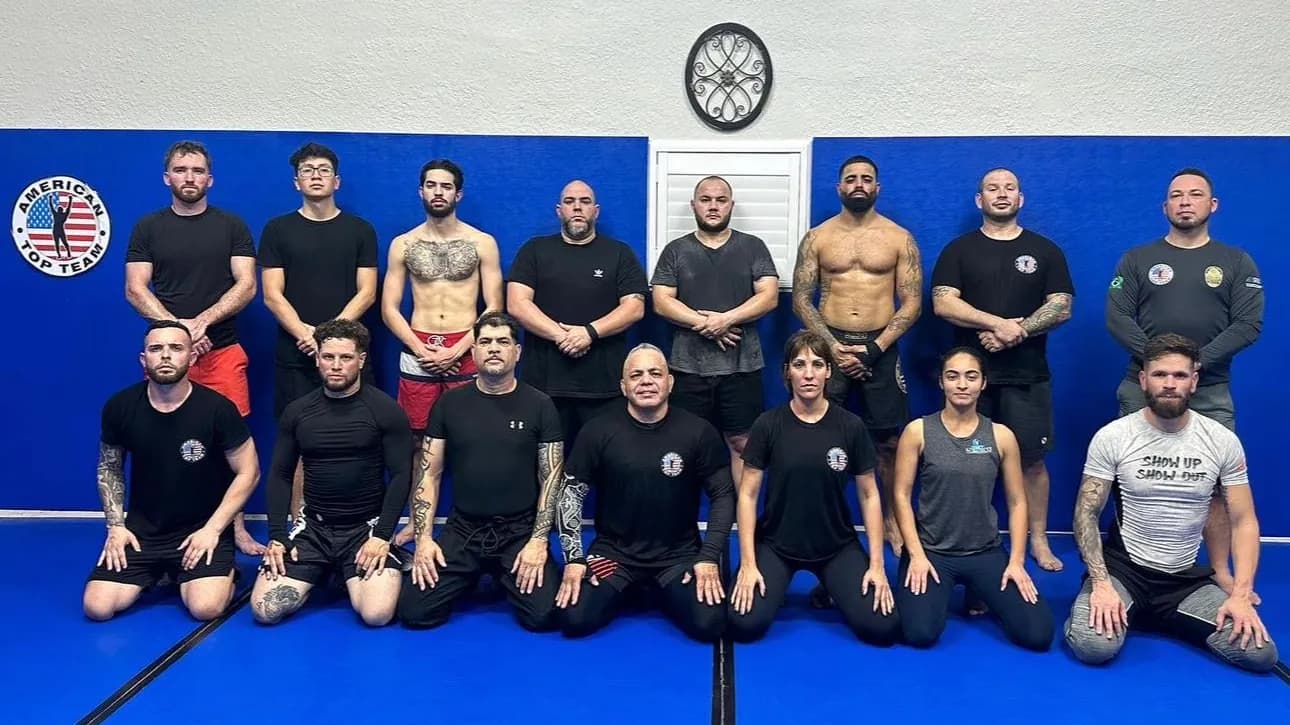
ATT Fort Myers, known locally as Team Hardoy, is led by Master Willy (Guillermo) Hardoy, a BJJ black belt 4th degree affiliated with American Top Team Florida. That lineage matters for the reasons covered above: a long-tenured black belt brings depth of technical knowledge that takes years on the mat to develop, and training under an instructor connected to an established team gives students access to a broader base of curriculum and coaching philosophy.
The academy runs classes for men, women, and kids, which means beginners of any background can find a class environment suited to where they are starting from. The school operates around the motto "Discipline, Confidence, Respect. A Stronger You," a framework that shapes how classes are run day to day, not just a phrase on a wall.
If you are ready to see a class in person, the academy can be reached by phone or WhatsApp at (239) 475-7105, or you can request a trial class through the contact options on the site.
Frequently asked questions
- Do I need to be in shape before starting jiu-jitsu in Fort Myers?
- No. Jiu-jitsu is one of the few sports where fitness is built through training rather than required beforehand. Classes are typically structured to teach technique first, with conditioning improving naturally as you attend regularly. Tell your instructor about any physical limitations before your first class so they can adjust accordingly.
- Is jiu-jitsu safe for beginners who have never done a martial art?
- Well-run academies ease beginners in through drilling and controlled practice before any live sparring, and instructors typically pair or supervise new students closely in early classes. Ask any academy you are considering how they specifically structure the first few weeks for someone with zero prior experience.
- How often should a beginner train each week?
- Many instructors suggest two to three classes per week for beginners, which is often enough to build consistency and retain technique between sessions without risking burnout or overuse injuries. Your own schedule and recovery will shape what is realistic.
- What should I wear to a trial class if I do not own a gi?
- A t-shirt and athletic shorts or pants work fine for an introductory visit. Most academies do not expect a new student to already own a gi, and many have a sense of whether a gi or no-gi (rashguard and shorts) format fits your trial class better once you arrive.
- How does Fort Myers heat affect jiu-jitsu training?
- Southwest Florida humidity increases how much you sweat during a session, which raises hydration needs compared to training in a drier climate. It also means training gear needs to be washed after every use rather than reused, since humid conditions let bacteria and odor build up faster.
- Does ATT Fort Myers offer classes for women and kids, not just men?
- Yes. ATT Fort Myers, led by Master Willy Hardoy, runs classes for men, women, and kids. Reach out by phone or WhatsApp at (239) 475-7105 to ask about which class fits your situation and to set up a visit.
Keep going
Related services
Serving
Found this helpful? Make us a preferred source on Google.
Ready to step on the mat?
Book a trial class in Fort Myers. No experience needed, just tell us your program and the best time to come.