Jiu-Jitsu Self-Defense for Women in Fort Myers: Skills You Can Actually Use
· By Master Willy (Guillermo) Hardoy
When women search for self-defense classes near them, the options usually fall into two camps: a one-time seminar with a handful of moves, or an ongoing martial art. Both have a place, but only one gives your body enough repetition to react calmly when something actually goes wrong.
Brazilian Jiu-Jitsu (BJJ) has become one of the most recommended paths for women who want practical, tested skills. It was built around a simple premise: a smaller person can control and escape from a larger one by using leverage, position, and timing instead of strength.
This guide explains why BJJ works so well for women's self-defense, what a good women-friendly class looks like, and how to deal with the worries almost everyone has before stepping on the mat for the first time.
Why Size and Strength Matter Less in Jiu-Jitsu
In most physical confrontations, the bigger and stronger person has a clear advantage. Many self-defense systems quietly assume you will be able to strike harder or move faster than an attacker, which is not a safe assumption for most women facing a larger man.
BJJ approaches the problem differently. Instead of trying to overpower someone, you learn to use your hips, legs, and frames (arms and forearms placed as solid structures) to create space, control distance, and put the other person in positions where their strength is far less useful.
Leverage is the key word. Your legs are among the strongest muscles in your body, and BJJ teaches you to use them to push, block, and control. A properly placed frame can hold off a much heavier person without requiring much effort, because bone structure is doing the work instead of muscle.
This is not magic, and nobody honest will tell you that technique erases every difference in size. What it does is give you real options in situations where, without training, you would have very few.
The Ground Is Where Many Women Feel Least Prepared
Self-defense instructors and researchers often point out that real altercations frequently end up in a clinch or on the ground, even when nobody intends for that to happen. A push, a trip, or a grab from behind can put you on your back in a second.
For a lot of women, being pinned under a heavier person is the scenario that feels most frightening and least covered by traditional classes. It is also exactly the area where Brazilian Jiu-Jitsu spends most of its time.
In BJJ you learn how to survive on the bottom, keep your head and neck protected, stop someone from settling their weight on you, and escape using techniques like the bridge and the shrimp (a hip movement that creates space along the ground). Then you learn how to get back to your feet safely so you can leave.
Practicing these escapes over and over turns a panic situation into a familiar one. That familiarity is a big part of what makes the training useful under stress.
Real Pressure Testing: Why Practice Against Resistance Matters
One of the biggest weaknesses of many self-defense classes is that techniques are only practiced against a cooperative partner. A move that works when someone lets it work can fall apart the moment a person actually pushes back.
BJJ is different because training includes live practice, often called rolling or positional sparring, where your partner is genuinely resisting at a controlled pace. You find out quickly which techniques you can really do and which ones you only thought you could do.
For self-defense, this matters more than any single technique. Training against resistance teaches your body to breathe, stay composed, and think while someone heavier is pressing on you. That calm is hard to build any other way.
Live training is always scaled. Beginners start with simple drills and specific positions, and a good school pairs new students thoughtfully so intensity grows with skill and confidence, never ahead of it.
What a Women-Friendly Class Should Look Like
Not every academy is a good fit, and it is fair to be selective. A women-friendly BJJ class is less about a special curriculum and more about the environment and how the instructor runs the room.
Look for a school where respect is visible: partners check in with each other, the instructor watches pairings closely, and nobody is pushed into hard sparring on day one. Questions should be welcome, and beginners should be able to work at their own comfort level.
A women-only class can be a great place to start. Many women feel more relaxed learning the fundamentals alongside other women, and it gives you a space to ask anything without feeling self-conscious. Training in mixed classes later can also be valuable, because it gives you practice against different body types.
A solid curriculum for women's self-defense should cover ground escapes, standing grip breaks, safe ways to fall, posture and balance, and controlled live practice. Those are exactly the areas covered in the Women's Jiu-Jitsu program at ATT Fort Myers Team Hardoy.
Common Worries (and Honest Answers)
"I am not in shape." Almost nobody is when they start. BJJ builds strength, mobility, and conditioning as you go, and drills are adapted to each person. You do not need to get fit before you start training; training is how you get fit.
"I am worried about getting hurt." BJJ uses controlled techniques instead of full-force strikes, and the tap system lets you stop any technique the moment it gets uncomfortable. A well-run class keeps intensity appropriate for beginners, and you always set your own pace.
"I feel awkward about the close contact." That is a very normal feeling. Grappling is close, and it can take a few classes to get used to it. Starting in a women-only class, choosing your partners, and training with people who understand etiquette makes the adjustment much easier.
"I do not know anything about martial arts." Everyone starts at white belt, regardless of background. The fundamentals are taught step by step, and nobody expects you to know terminology or positions on your first day.
Confidence Is a Self-Defense Skill Too
Physical technique is only one part of staying safe. Awareness, setting boundaries, and avoiding danger in the first place come before any move on the mat, and a responsible instructor will say so.
What many women notice after a few months of BJJ is a change in how they carry themselves. Knowing that you have practiced staying calm under real pressure tends to show up in posture, eye contact, and how clearly you say no.
That confidence is not about looking for a fight. It is about knowing that if something does go wrong, you are not frozen, and you have a plan you have actually rehearsed.
How to Start Training in Fort Myers and Cape Coral
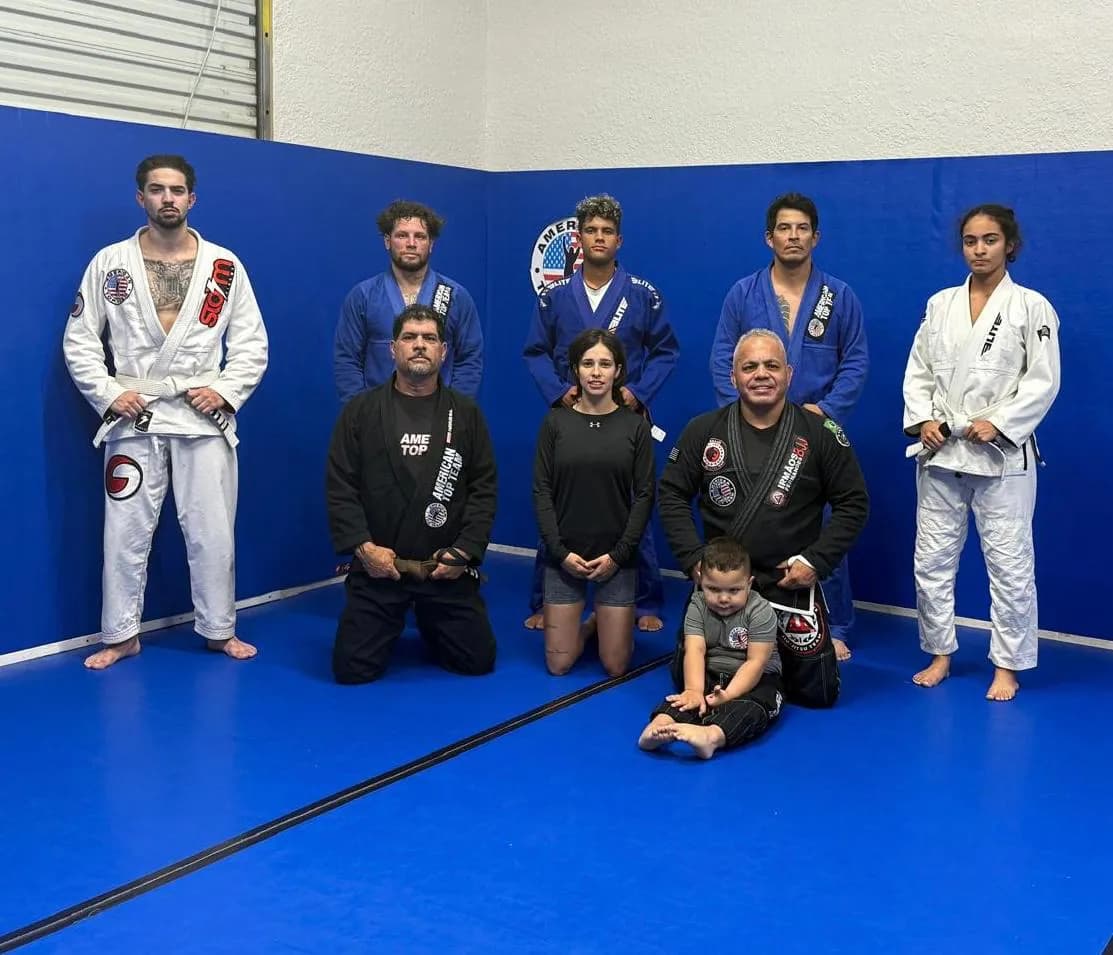
ATT Fort Myers Team Hardoy is led by Master Willy (Guillermo) Hardoy, a BJJ black belt 4th degree from American Top Team Florida, and offers classes for men, women, and kids. The Women's Jiu-Jitsu program focuses on practical self-defense, confidence, and fitness in a respectful room built for women.
The academy's grand opening is expected in approximately 30 days. Until then, training is exclusively for returning students and invited guests, and the adult, women-only, and children's class schedules will be announced soon.
If you live in Fort Myers or nearby Cape Coral and have been searching for a women's self-defense class you will actually stick with, the simplest next step is to join the Grand Opening List on WhatsApp at (239) 475-7105. You will be among the first to know when classes open.
Frequently asked questions
- Is Brazilian Jiu-Jitsu good for women's self-defense?
- Yes. BJJ focuses on leverage, escapes, and control on the ground, which is where many real confrontations end up. Because you practice against resisting partners, you learn what actually works for your body instead of only memorizing moves.
- Do I need experience or a certain fitness level to start?
- No. Every student starts as a beginner, and drills are adapted to your comfort level. Strength, mobility, and conditioning build naturally as you keep training.
- Is a women-only class better than a mixed class?
- It depends on your comfort and goals. Many women prefer to learn the fundamentals in a women-only class, then add mixed classes later to practice against different sizes and body types. Both have real value.
- Is jiu-jitsu safe for beginners?
- BJJ is trained with control instead of full-force strikes, and you can tap to stop any technique at any time. A good instructor pairs beginners carefully and does not put new students into hard sparring on day one.
- What should I wear to my first class?
- Comfortable athletic clothes without zippers or buttons, plus a water bottle. If you have a gi, bring it. Remove jewelry before class.
- When do women's classes start at ATT Fort Myers Team Hardoy?
- The grand opening is expected in approximately 30 days, and the women-only class schedule will be announced soon. Join the Grand Opening List on WhatsApp at (239) 475-7105 to hear first when classes open.
Keep going
Related services
Serving
Found this helpful? Make us a preferred source on Google.
Ready to step on the mat?
ATT Fort Myers Team Hardoy opens in Fort Myers soon. Join the grand opening list on WhatsApp and we will let you know as soon as classes open.